

Work · Mistral residential building
Ground improvement under a residential building settling on expansive clays
A building of 20 homes with two basements was cracking from differential settlement of more than 8 cm. We consolidated the ground beneath the footings with reinforced cement-grout injections, without touching the existing foundations.
Objective
The owners’ association of the building, completed in 2005, asked us to halt the damage spreading through it: cracks in partitions and façades, out-of-plumb walls and sunken ground slabs, worst at the rear and at the north end. The aim was to stop the settlement by acting on the ground, not on the symptoms.
Difficulties
- A soil that changes volume. Below the formation level of the footings lie highly plastic, highly expansive clays with a bearing capacity of around 0.6 kp/cm². They swell, shrink or collapse with moisture, so a leak or a rainy season can set the damage off again.
- Very variable depth. The soft soils reach more than 12 m at the north end and only about 5 m at the south. That difference explains why the building sinks more on one side than the other.
- Foundations that did not match the drawings. The trial pits revealed footings whose shape, size and depth differed from the drawings, with anomalous elements. Their behaviour could not be predicted from the documentation.
- An occupied building. The work had to be done inside garages, storerooms and common areas in use.
Solution
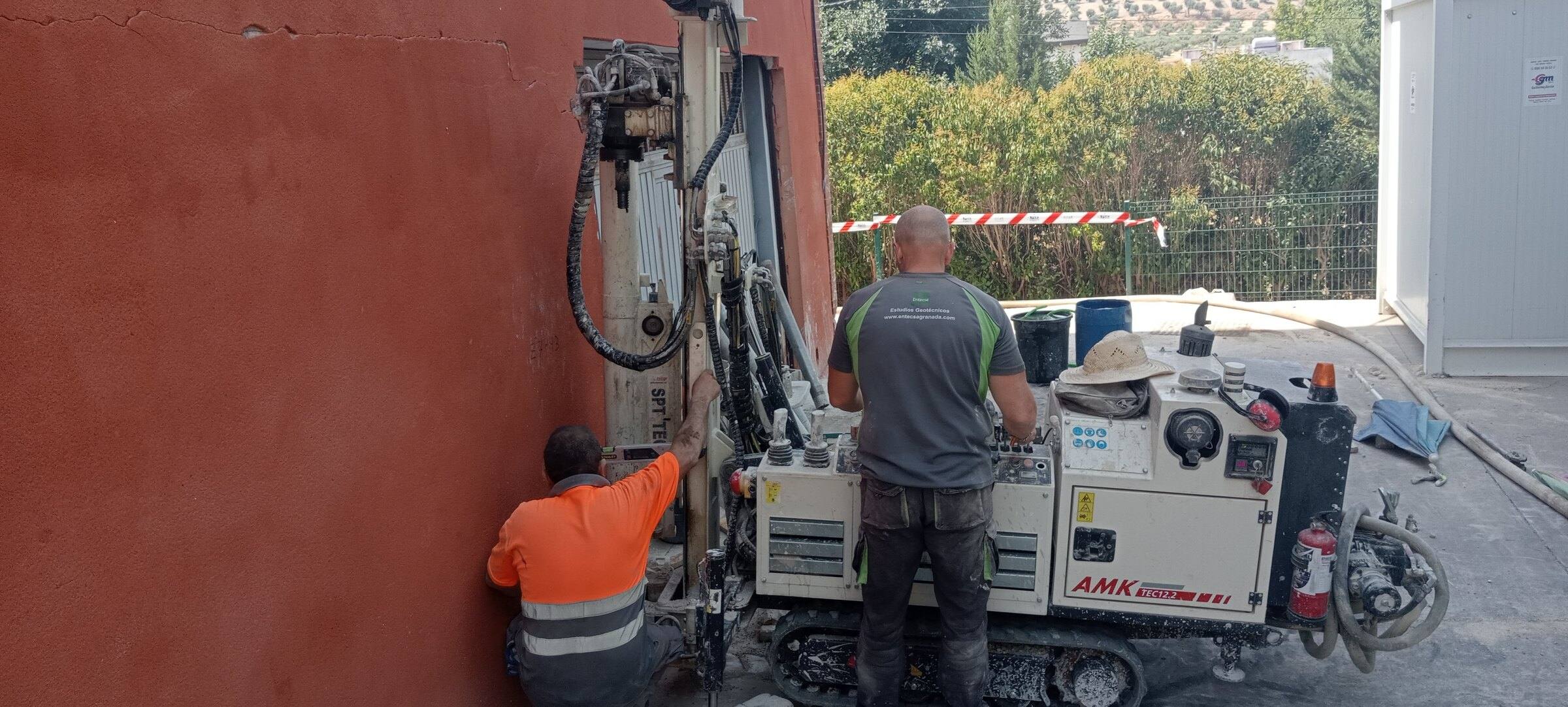
Before proposing anything, the problem was reconstructed: a topographic survey and crack mapping, three rotary boreholes, seven dynamic probes and four trial pits. The calculation predicted a settlement of 6.5 cm in the most unfavourable area. Levelling of the basement slabs confirmed that it was happening, and even measured differences in level of more than 8 cm.
The chosen solution was reinforced cement-grout injection through sleeve pipes. The boreholes pass through the foundations and an N-80 steel tube with valves every 50 cm is installed in each one. Grout is injected under pressure through each valve in three successive, controlled passes:
- The grout fractures the ground into lenses that interlock.
- The pressure consolidates the soil trapped between them.
- The steel tube stays in place as reinforcement for the treated ground.
This technique was chosen because it allows the injection to be repeated at each valve and the volume and flow to be metered, giving very precise control of deformations. It also does not rely on the existing footings, whose behaviour was uncertain. The treatment is concentrated beneath the core of each footing and graded in intensity and depth: it is heavier at the north end and along the rear façade, where the damage is greatest.
Result
The first phase deals with the most damaged area, which is the most urgent. Throughout the works the drilling, the injected volumes and the levels of the targets on the façade were checked daily to make sure the treatment was not causing unwanted movements.
Before
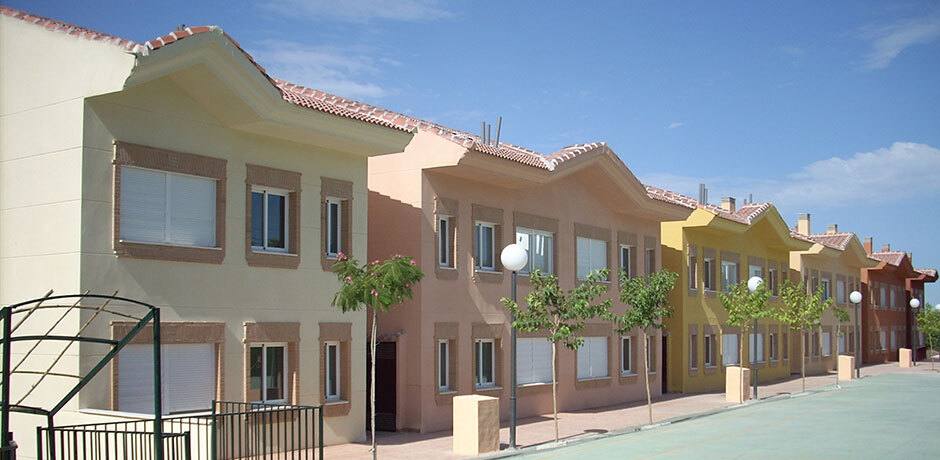
The building 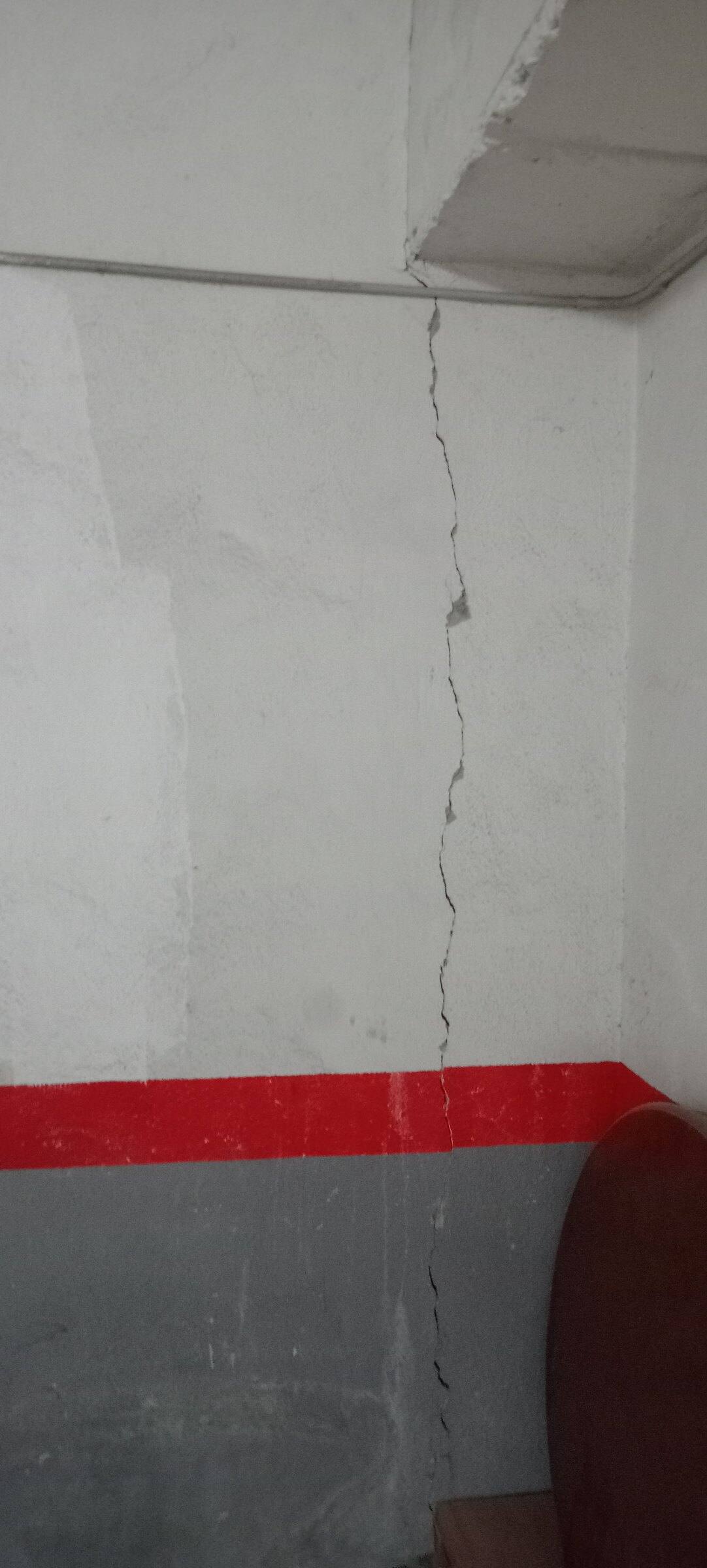
Vertical crack in the basement 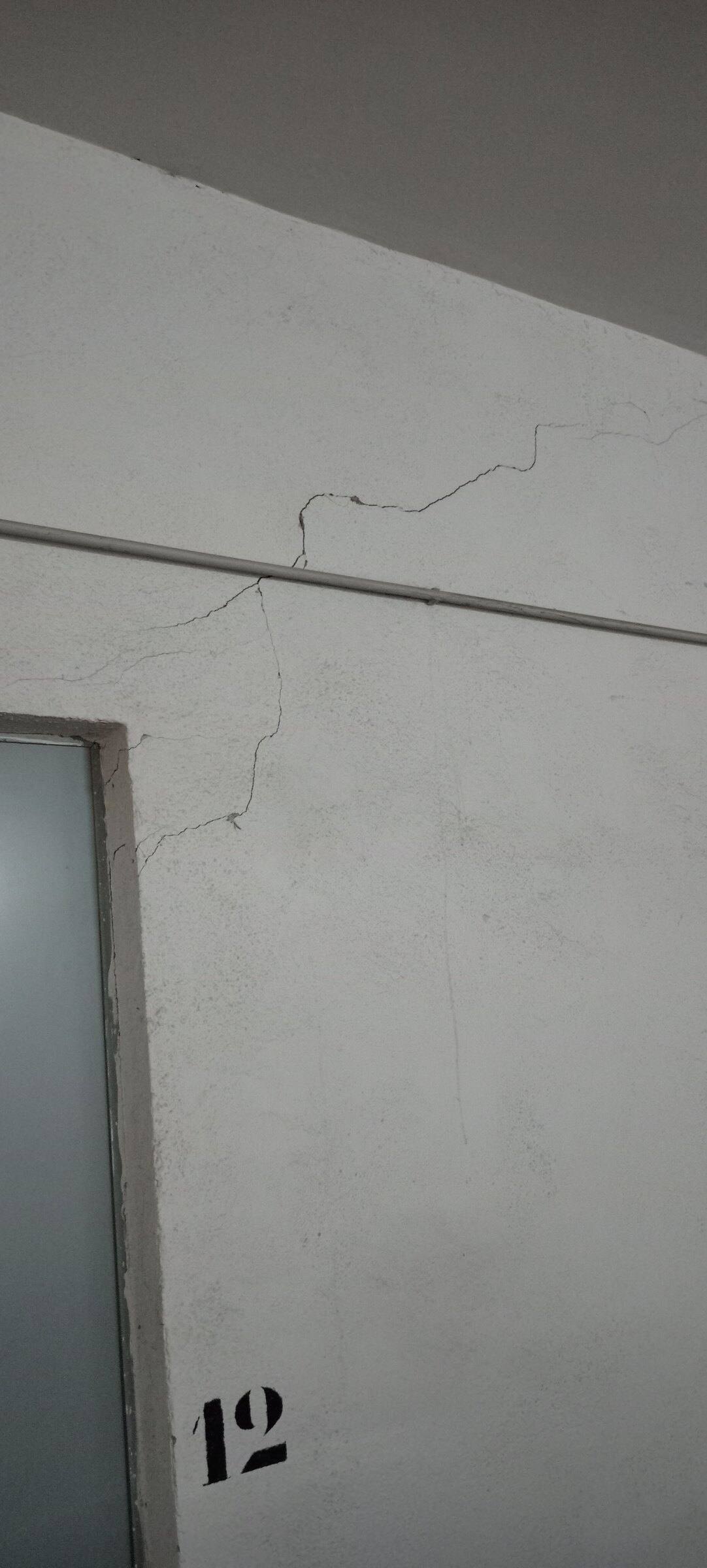
Crack at the corner of an opening 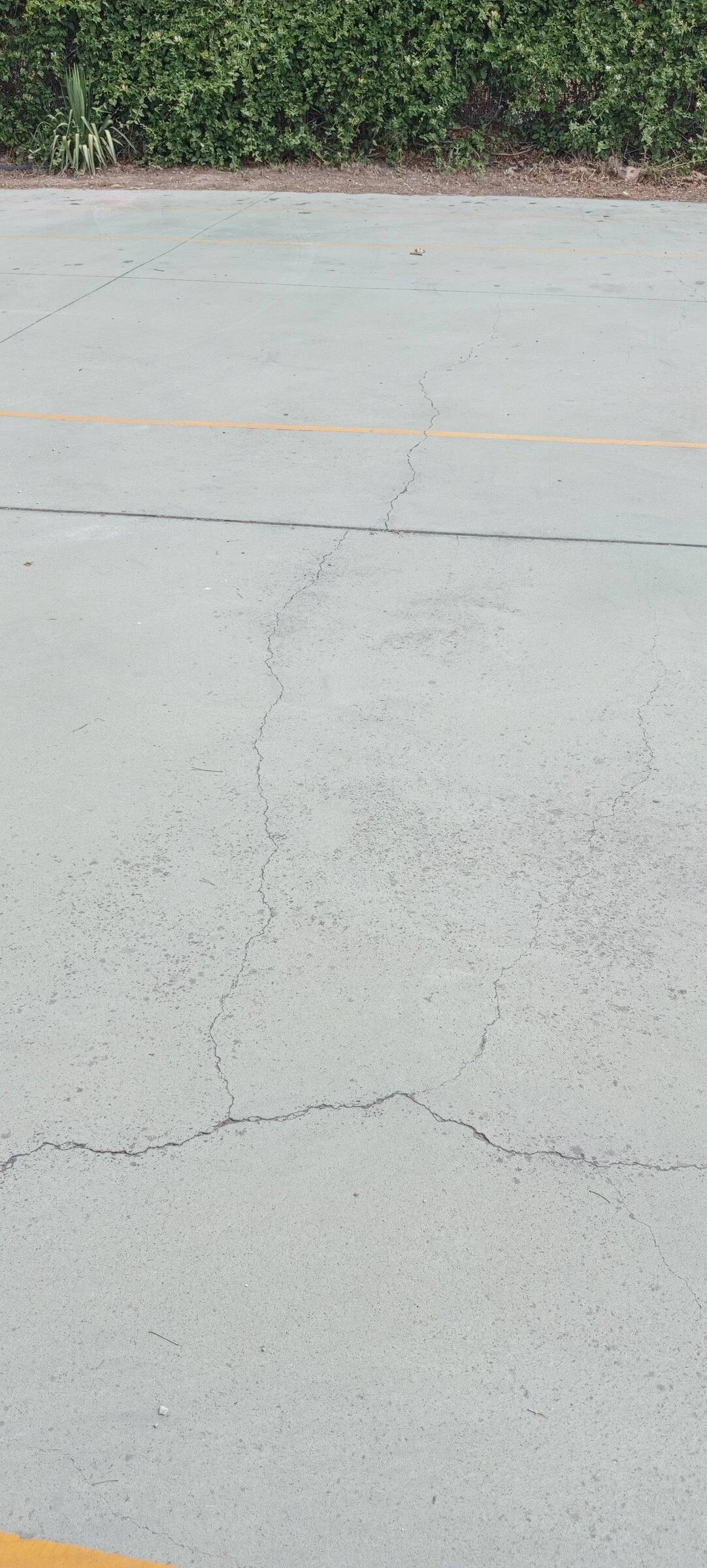
Cracks in the ground slab
During the works
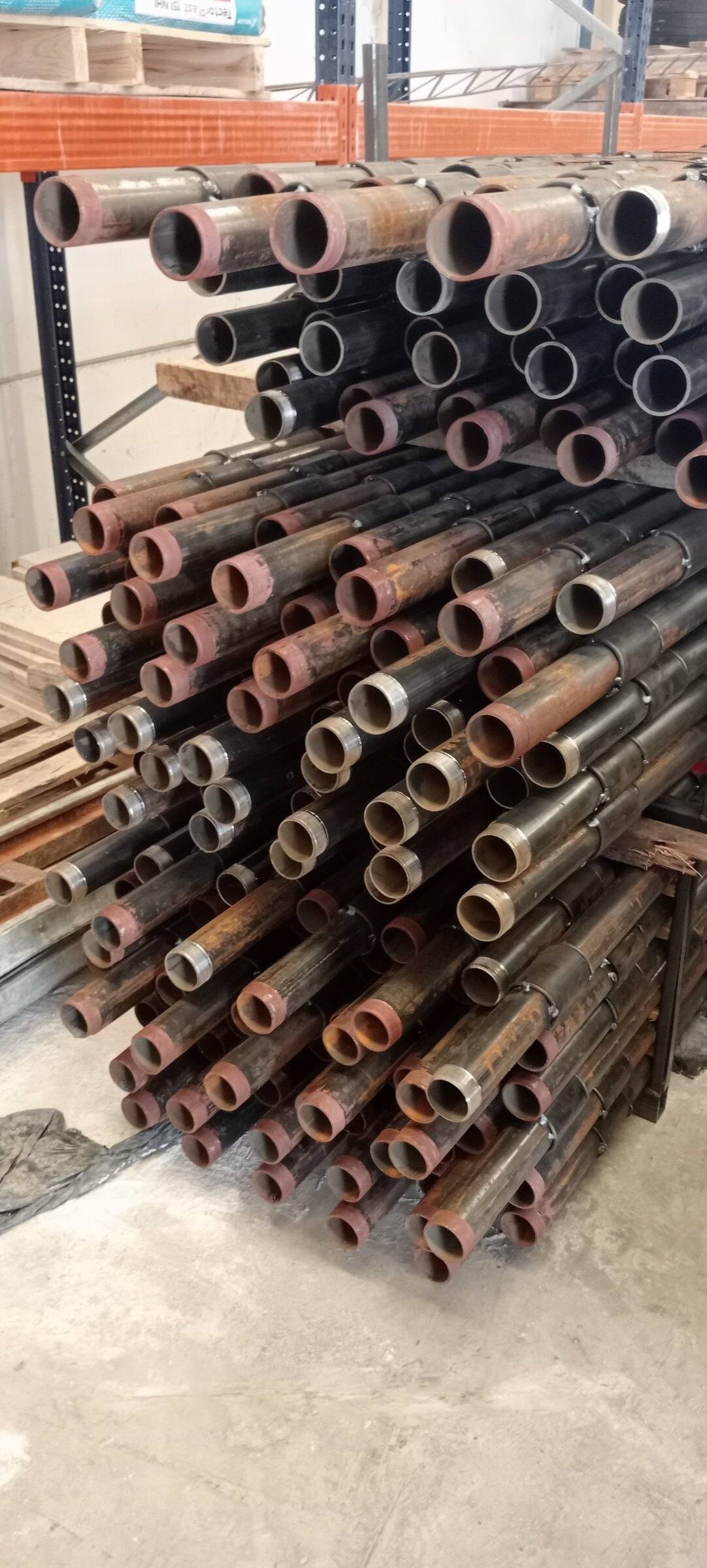
N-80 steel tubes for the injection 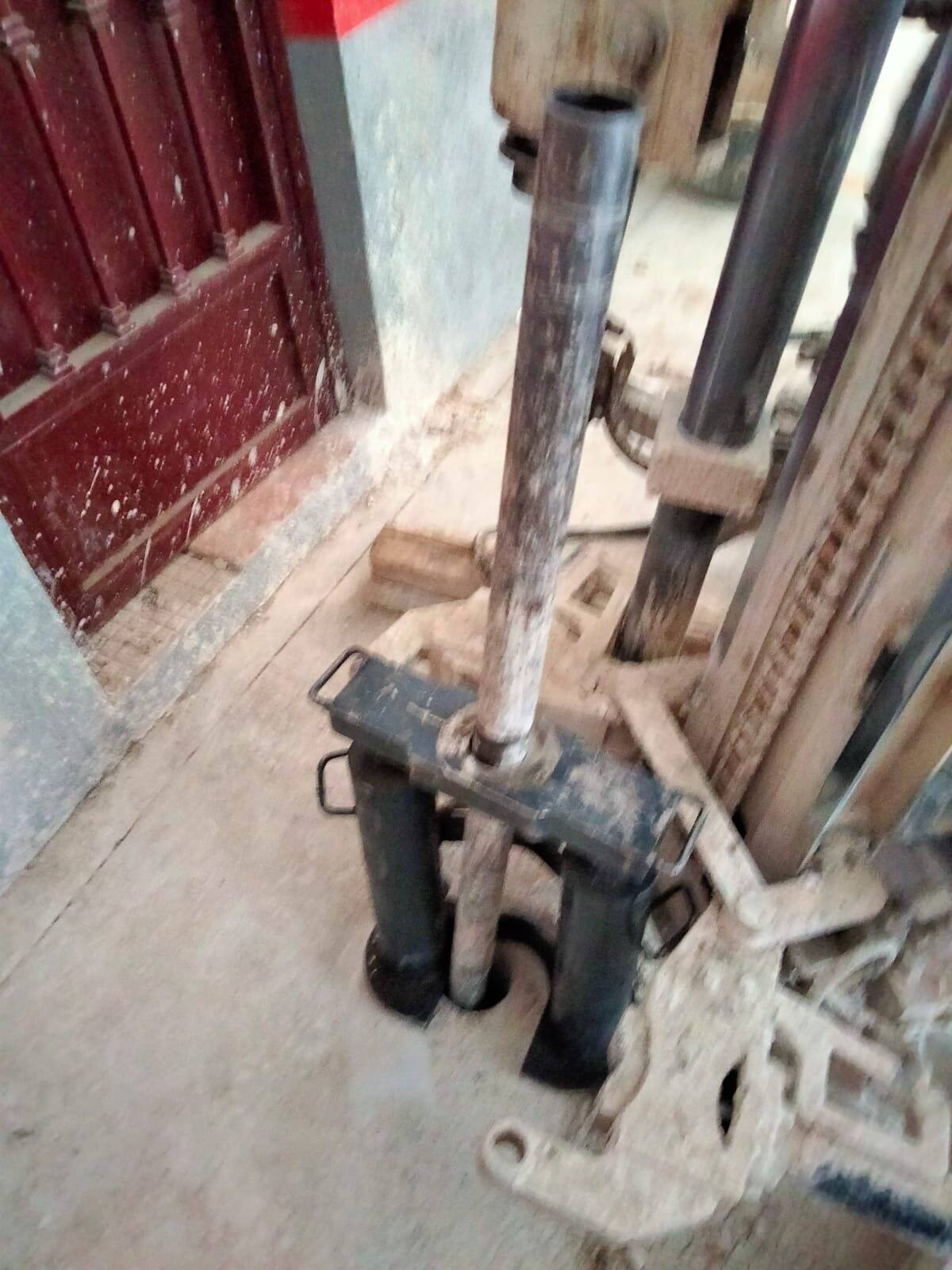
Drilling through the paving 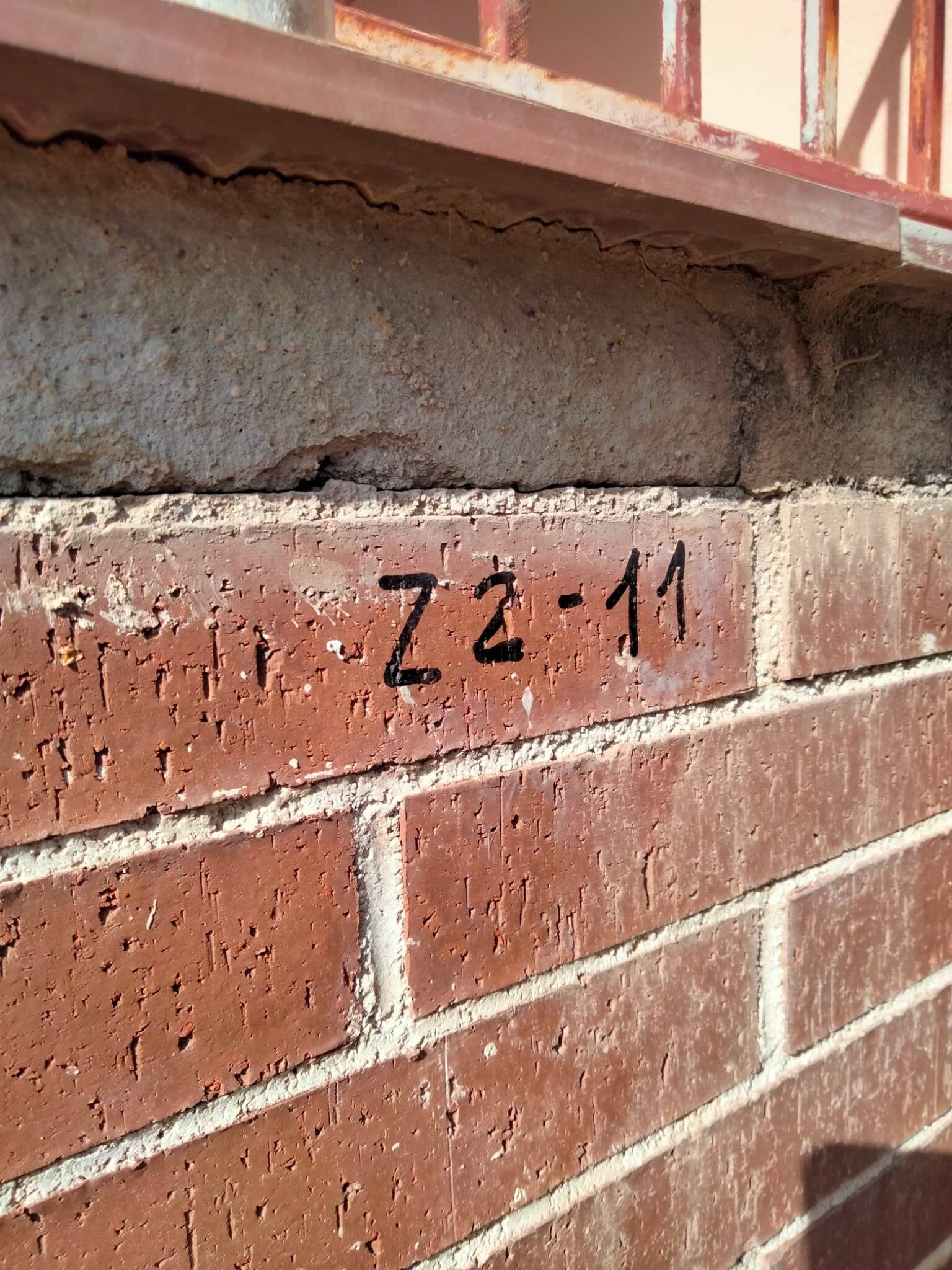
Wall dropped away from the slab 
Injection tubes installed